
Expert insight : At the heart of data centres, industrial performance begins with a cable
Expert opinion by
Eliott Hoole, Project Business Manager, LAPP Limited
Matt Ansell, Product portfolio manager
----
A rapidly growing market that is strategic for French and European industry
Globally, cloud and internet giants are building between 120 and 140 new data centres each year to meet the explosion in capacity requirements, particularly with the rise of artificial intelligence and cloud services.
These data centres, where our data is stored, processed and secured, are also an essential pillar of digital sovereignty in Europe: more than 3,300 data centres are already spread across some 40 countries.
France ranks among the top three European markets with more than 300 operational sites. This capacity is expected to increase sixfold by 2035.
So construction continues apace.
In a data centre, cables are never a trivial component
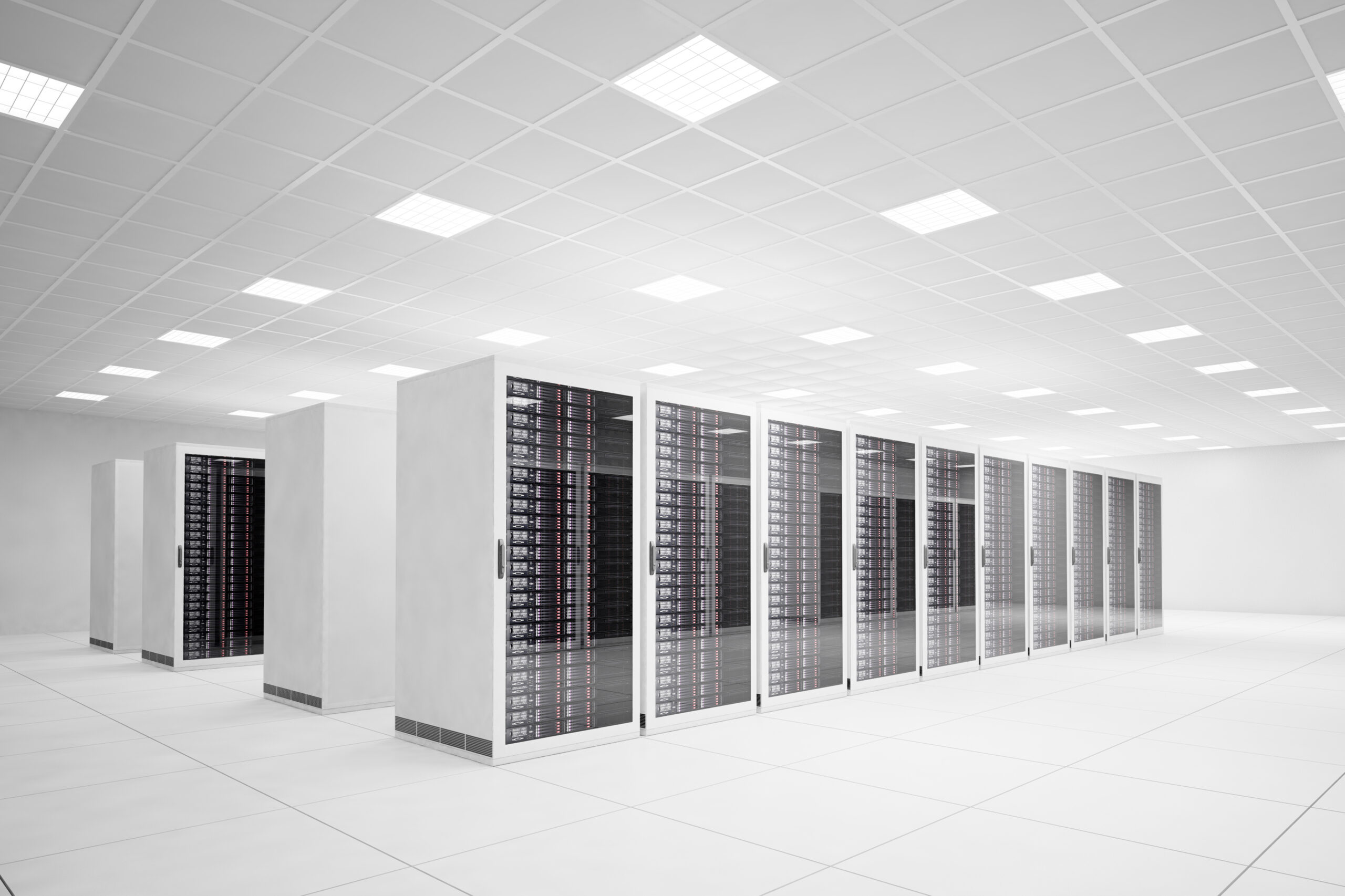
What can be found inside a data centre? Servers, cooling systems and software architectures. And tens, even hundreds, of kilometres of cables.
Among other things, there are cables connecting the power supply, control systems, security devices, cooling systems, batteries, and backup solutions that ensure continuity of service.
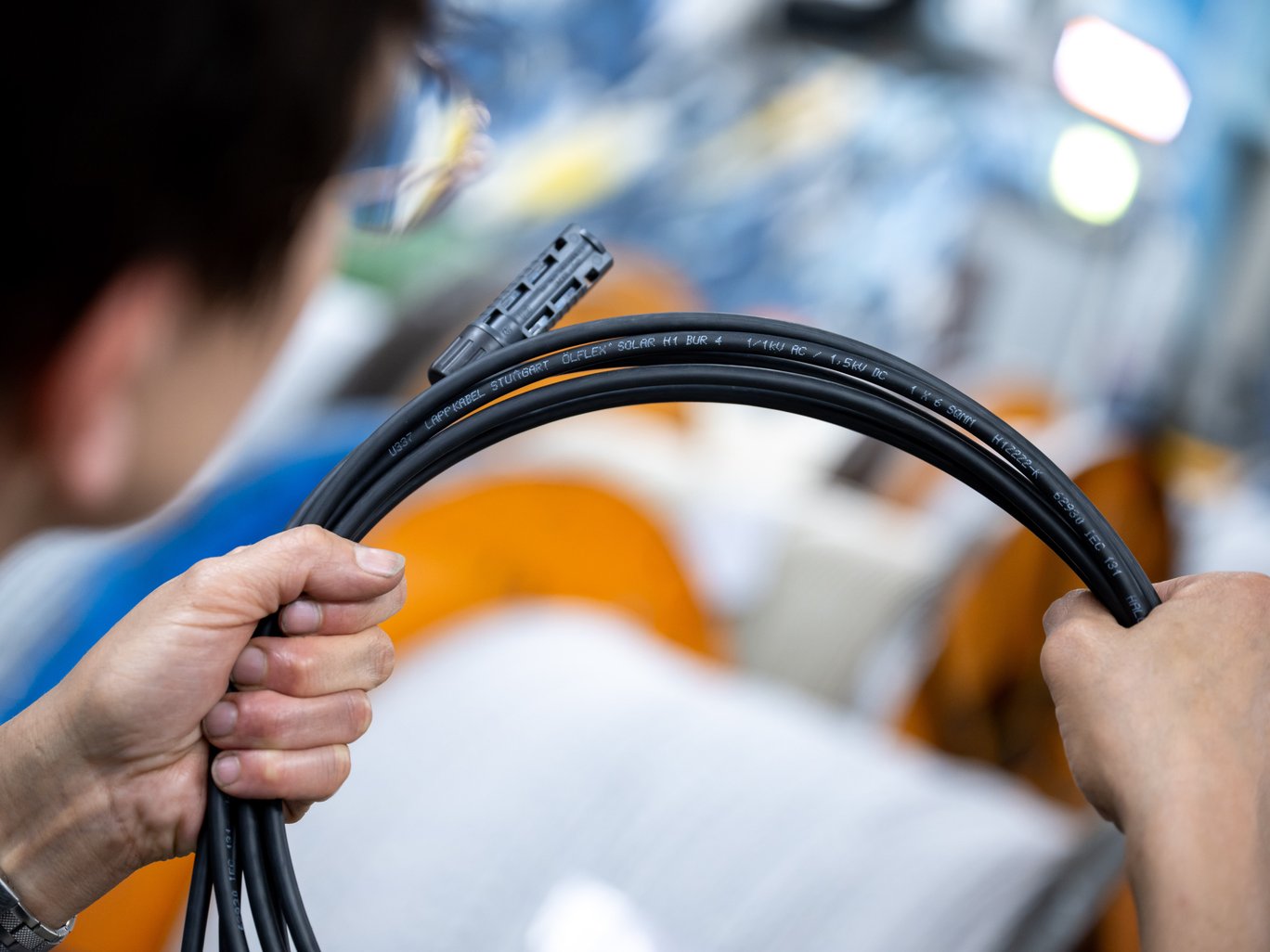
Each cable meets very specific business requirements. In data centres, where a signal interruption or cable failure can compromise an entire system, this expertise translates into high-performance, reliable, traceable products that comply with the most demanding regulatory classifications.
They are the result of precise engineering, with suitable materials, resistant structures, controlled behaviour in the event of fire and performance validated for specific industrial uses.
A site subject to high thermal stresses
In many ways, a data centre functions like any other building – with its electricity, ventilation and security systems – where each component must be designed for reliability, redundancy and safety.
However, as we all know, these infrastructures consume a lot of energy and are subject to high thermal stresses. They heat up and require large cooling systems, which have a significant environmental impact.
This raises another concern: the risk of fire.
It is easy to imagine that this industrial site, which is constantly under power, with continuous electrical currents flowing through it, batteries, sensitive equipment and kilometres of cables in a densely equipped space, is not a conventional commercial building.
The fire at the OVHcloud data centre in Strasbourg in 2021, which caused massive service interruptions for thousands of businesses and institutions, left a lasting impression. More recently, several incidents involving fires in battery rooms or electrical installations have been reported in Europe, the United States and Asia, highlighting the potential vulnerability of these critical infrastructures to thermal and electrical risks.
Beyond the operational and reputational impacts, a fire in a data centre represents a considerable economic cost. According to industry analyses, the cost of an operational shutdown can reach between £200,000 and £400,000 per hour, including operating losses, equipment damage, contractual penalties and critical service interruptions. In the most serious cases, the damage can run into tens or even hundreds of millions of pounds.
CPR classification: much more than a standard, a design tool
This fire risk affects the safety of people, the protection of equipment and the continuity of digital services.
A CPR classification specifically assesses how these cables, which include conductors, insulation, shielding and sheathing, will react to fire. This classification is not specific to the industry; it more generally regulates the performance of all construction products placed on the market that are permanently installed in buildings and infrastructure.
While no cable is completely fireproof, some are designed to slow down the spread of flames by controlling the reaction of each layer that makes up the cable. This result is the fruit of complex choices of materials and structures, which require real engineering expertise.
The CPR thus establishes a scale of performance classes, from the most basic to the most demanding, allowing designers, installers and project owners to choose cables suited to their uses, environments and risk levels.
In data centres, technical specifications increasingly require high classes such as B2ca. This classification combines a very limited contribution to fire (B2) with enhanced requirements for secondary effects: low smoke emission (s2), absence of flaming droplets (d1) and very low acidity of emitted gases (a1). These performance levels are now considered a minimum standard in many data centre projects, particularly for hyperscale infrastructures, where energy density and service continuity issues require maximum fire risk control.
In sensitive infrastructures such as data centres, this classification becomes a key design and safety tool, far beyond a simple regulatory requirement.
Ultimately, the CPR classification does not judge a simple "pipe with wires inside".
It evaluates the behaviour of a complex assembly, designed as a system in its own right. It reflects a very high level of industrial expertise, where every layer counts and where safety depends on an in-depth understanding of this technical mille-feuille.
Fire, smoke, droplets, acidity: anticipating incident scenarios
The CPR classification does not focus on the electrical performance of the cable, but on its reaction to fire: contribution to flame spread, smoke release, production of flaming droplets and emission of acid gases.
The objective is twofold. On the one hand, to protect people by facilitating evacuation and limiting the risks associated with toxic smoke. On the other hand, to preserve infrastructure and equipment by reducing the impact of fire on critical installations.
The CPR classification analyses the smoke produced. In a confined space such as a data centre, smoke is often the main hazard. Its density, composition and toxicity depend directly on how the different layers of the cable degrade under the effect of heat. Designing a cable that produces limited and less harmful smoke requires a detailed understanding of these interactions. The acidity of the gases released is a determining factor. Corrosive emissions can not only endanger people, but also cause lasting damage to sensitive electronic equipment. Limiting this acidity involves working on the very composition of the internal layers of the cable, right down to the choice of additives and polymers.
Another critical issue is droplets. A cable that melts and drips can act like a candle, spreading the fire to other areas. Here again, everything depends on the internal architecture of the cable: the way the materials hold together, stiffen or deform under the effect of heat.
In a data centre, limiting smoke and its acidity is crucial: it is smoke, more than the flames themselves, that causes prolonged shutdowns, corrosion of electronic equipment and the inability to quickly restart systems after an incident.
Partner to players in the construction, energy and design sectors
This approach to fire risk illustrates a reality that is often overlooked: in industry, and even more so in critical infrastructure, cables are never generic components.
They are the result of a careful balance between standards, uses, risks and expected performance. And it is precisely this ability to move from catalogue to customisation, from standard to practical use, that distinguishes mature industrial expertise from a simple product offering.
Beyond product performance, it is the manufacturer's holistic industrial approach that makes the difference: integration of standards, collaboration with integrators and design offices, adaptation to the specific needs of critical infrastructure, and the ability to support large-scale projects from start to finish.
#ELECTRONICS #INDUSTRY
Photothèque


LAPP : Autres communiqués de presse
6 septembre 2026
INVITATION PRESSE – Mardi 17 novembre – CÂBLES : S’ADAPTER AUX MARCHÉS, MAÎTRISER LES MATIÈRES
📅 Mardi 17 novembre 2026 de 11 h à 15...
6 septembre 2026
InnoTrans 2026: LAPP brings high-performance data connections to the rail industry
Passenger information systems, video surveillance, and Ethernet-based control and communication...
6 septembre 2026
InnoTrans 2026 : LAPP apporte des connexions de données hautement performantes au secteur ferroviaire
Les systèmes d’information des voyageurs, la vidéosurveillance et les réseaux...
21 mai 2026
LAPP to Showcase Future-Ready Industrial Connectivity at Drives & Controls 2026
03–04 June 2026 | NEC Birmingham – Booth: 5/E30 Enabling...
20 mai 2026
LAPP is accelerating its momentum in intralogistics with a new generation of industrial connectivity solutions
New developments from the proven ÖLFLEX® range The new ÖLFLEX®...
3 mai 2026
LAPP accélère sa dynamique dans l’intralogistique avec une nouvelle génération de solutions de connectivité industrielle
De nouveaux développements issus de la gamme éprouvée ÖLFLEX® La...
23 mars 2026
Le fabricant français de simulateurs de conduite, Prosimu, choisit la technologie de connectivité LAPP
Des machines de haute précision au cœur de multiples usages...
6 mars 2026
Visite de presse – vendredi 10 avril – Au cœur de l’industrie connectée : visite de l’usine Câbleries LAPP – Forbach
Robotique industrielle, centres logistiques automatisés, infrastructures énergétiques, bâtiments techniques, installations...
21 février 2026
Électrification, data, énergie : le fabricant mondial de systèmes de connectivité industrielle LAPP mise sur le made in France
Salon Global Industrie - Paris Villepinte - 30 mars /...
17 février 2026
Datacenters : en Moselle, LAPP fabrique des câbles haute sécurité pour les infrastructures numériques européennes
Une industrie mosellane au cœur des enjeux numériques européens Avec...
11 février 2026
Le chiffre d’affaires de LAPP s’est stabilisé à 1,93 milliard d’euros pour l’exercice 2025
« Notre croissance en Asie et en Amérique aide LAPP...
11 février 2026
LAPP’s sales stabilised at EUR 1.93 billion in fiscal year 2025
“Our growth in Asia and America is helping LAPP through...
9 février 2026
Datacenters: LAPP, a global supplier of cables and connectors, develops highly fire-resistant materials
Datacenters: a market with high equipment requirements At a time...
9 février 2026
Avis d’expert – Au cœur des datacenters, la performance industrielle commence avec un câble
Avis d’expert Thierry Mazeran, Directeur des ventes, LAPP France Philippe...
9 février 2026
Datacenters : LAPP, fournisseur mondial de câbles et de connexions, développe des matériels haute résistance au feu
Datacenters : un marché à haut niveau d’exigence d’équipements Dans...
9 février 2026
LAPP, le fabricant mondial de systèmes de connexion industrielle, mise sur le made in France pour accompagner les industries critiques
Électrification, data, énergie : à l’occasion du salon Global Industrie,...
7 janvier 2026
Le groupe LAPP acquiert la totalité des parts de la coentreprise JJ-LAPP
L'acquisition de JJ-LAPP est la plus importante de l'histoire de...
10 décembre 2025
Connecteurs haute performance EPIC® : des connexions puissantes pour tous les défis
Lors du salon SPS de Nuremberg 2025, LAPP, l'un des...
1 septembre 2025
LAPP améliore son EPIC® POWERLOCK : assemblage, installation et déverrouillage sans outils spéciaux.
Que ce soit pour les grands événements, dans l'industrie ou...
21 juillet 2025
LAPP élargit son portefeuille pour l’industrie de demain
Dans le domaine de l'intralogistique, LAPP propose des solutions de...
4 juin 2025
LAPP rachète une société chinoise spécialisée dans les connecteurs industriels : acquisition stratégique de Cableforce Electronics Co., Limited.
LAPP, fournisseur mondial leader de solutions intégrées et de produits...
16 avril 2025
Alimentation électrique fiable même sous l’eau : ÖLFLEX® AQUA 510 P pour l’aquaculture.
Une grande partie des fruits de mer et des poissons...
16 avril 2025
Pionnier d’une nouvelle génération de connecteurs : connecteur moteur M23 pour servomoteurs par LAPP.
Les servomoteurs sont utilisés partout où des entraînements de haute...
9 janvier 2025
LAPP investit dans sa stratégie de croissance
Afin d'accroître encore davantage la part de marché en termes...